Thursday, March 29, 2012

Workshop & Writing

Today, to start off, please take a few minutes (no more than 10 minutes) to respond on the forum about the workshop this morning. Did you find it valuable? Did you learn anything about writing from participating in the exercises? What did you learn about your own writing? Were there any "ah-ha!" moments? Post your response to the forum.

During the rest of 7th period, please prepare one of your pieces that you've been working on for a workshop with your group 8th period.

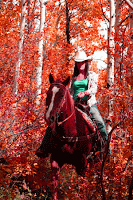
Our next collection of short fiction is the book: Cowboys Are My Weakness by Pam Houston. We'll be reading this book quickly. The assignment is as follows:
If you want an A/A+: Read 10-11 stories in this collection and write a response/book review (details on this will follow next class).

If you want a B/B+: Read 7-9 stories in this collection and write a response/book review (details to follow)

If you want a C/C+: Read 4-6 stories including the stories: Cowboys Are My Weakness and Sometimes You Talk About Idaho. You may choose for yourself the other 2-4 stories. Write a response/book review (details to follow).
Some background info to help set the tone:

Pam Houston (author website)
Country Western Song Lyrics (yes, I suppose they ARE poems)
Cowboy Songs (Website concerning Western music and history)
Music from Western films
Cowboy Poetry (video)
Kelly Clarkson & Jason Aldean introduce a Country Singer
Kenny Chesney
Hip Hop vs. Country Music (amateur documentary)


During 8th period, please prepare and conduct a writing workshop. If you finish early, feel free to revise and continue working on your unfinished pieces.

HOMEWORK: Complete The Madonnas of Leningrad (if you haven't done so already); begin reading Cowboys Are My Weakness.

Tuesday, March 27, 2012

Character Sketching and Internal Monologues

1. Make a list of character names (both funny, serious, and other)
2. Circle three of these names
3. Chose one of these three names and conduct an "interview" with the character. Write this out as a journalism article that might appear in a magazine or newspaper.

This is part of your brainstorming process. We will use much of this later in our next story or exercise.

After jotting notes in your journal (brainstorming), create a character sketch article. Look here for notes about how to write a character sketch.

Write a character sketch (no more than 1 page, please--a few descriptive paragraphs is fine) for one of your chosen characters. This should be turned in as lab/writing participation credit.

What to do now that the sketch is completed?

As you know, freeverse is a kind of poetry that is not restricted by specific patterns of meter, measured lines, strict rhyming patterns. It CAN still include quite a few literary devices like imagery, personification, sound devices, metaphor, figurative language, repetition, enjambment, etc.

Freeverse is not just words randomly placed on a page. It is free from formal metrical design, but not from ANY design or craft. You are probably at this point most familiar with freeverse.

Key Poetry Vocabulary you NEED TO KNOW (or remember):

Freeverse.
Enjambment.
Tone.
Voice.
Diction.

Internal monologues are like plays or 1st person POV short stories, but can include more than these forms. Today you will create your own internal monologue poem based on your character sketch (see above). Use your character sketch (not necessarily YOU) and give that character an opinion/attitude or feeling about a dramatic situation or single event occurring in the character's "life".

Things to note: DO NOT WRITE IN FRAGMENTS. Poetry or verse uses SENTENCE structure, just like prose. At this point, do not omit or leave out punctuation. Your sentences should be broken into LINES. LINES should be broken into STANZAS. If you often use stanzas, try not using them. If you never use stanzas in your poems, use stanzas to break ideas apart into smaller chunks.

Examples of internal monologue poems:

The Love Song of J. Alfred Prufrock by T.S. Eliot (here's a video of Eliot reading his poem)

Lady Lazarus by Sylvia Plath. The vocal performance read by the poet.

My Last Duchess by Robert Browning. Here's a reading of the poem.

To An Athlete Dying Young by A.E. Housman. The reading of the poem.

Miniver Cheevy by Edwin Arlington Robinson. The poem read.

Daddy by Sylvia Plath

Nature Poems:

Petals by Amy Lowell

The Lamb by William Blake

Stopping by Woods on a Snowy Evening by Robert Frost

Fog by Carl Sandburg

The Thought Fox by Ted Hughes

Friday, March 23, 2012

The Importance of Tense

In the English language there are three tenses that a writer can use, and these tenses have distinct benefits and drawbacks.

The three tenses we use are:
  • 1. Past
  • 2. Present
  • 3. Future
You may notice that tense all seems to rely on the concept of TIME. The normal default for a story (because it IS a story) is to use the past tense. This means the writer can cover the general past (that which has happened before the present moment), the immediate past (that which has just happened), or the distant past (what occurred when the character was years or centuries younger).

Past tense allows the writer to:
1. Create characterization by giving a character time to REFLECT on an event.
2. Create a CONTRAST between what has happened in the past and what events are likely to occur again in the present. This might allow for a writer to use an open ending or surprise ending effectively because previous events create a pattern, for example.
3. Use past tense when the EVENTS of the story and the choices a character makes are important.
4. It is awkward to have your 1st person narrator die in past tense.
HOW TO WRITE IN PAST TENSE: Use the past tense of the verbs in your story/narrative. You have to learn these to avoid making simple mistakes in tense.

Present tense allows the writer to:
1. Express action occurring in the present. Present tense highlights and stresses the current moment.
2. To examine a character's current state of being
3. To suggest occurrences or actions that will carry on in the future
4. To examine an action that started in the past and continues into the present.
5. Use present tense when you want immediacy.
6. To describe both habits and routines and general facts
7. To describe unchanging states of being
8. To indicate events in the near future
9. To provide narratives as instruction
10. Allows the writer to use the historical present for stylistic effects
Future tense is usually not used in fiction, but crops up occasionally in experimental works.
Use future tense to:
1. Write about what is about to happen
2. Examine uncertain or varying distances or events ahead in time
3. Allows the narrator to use probability or intent
4. Allows for predictions or imminence of actions (that which is likely to happen)
Some key phrases to note you are in the future:
I shall, I will, I may, I might, I must, I should, I'm about to, etc.

TASK: Look through your portfolio. Choose a poem or fiction piece and change the tense. Call this a new draft.

Wednesday, March 21, 2012

Portfolio Building, Psychology, & Coffeehouse

Please continue working on your portfolio drafts. If you are planning to attend the coffeehouse this evening, please prepare your pieces. You may also select to continue your reading for The Madonnas of Leningrad. Try to finish this book by next week when we have our community presentation (March 26) and our author masterclass (March 29).

SPOTLIGHT ON: Character development and voice

In the novel, Marina is suffering from Alzheimer's Disease--a mental health condition (cognitive disorder). This makes the story more poignant, important, and relevant to our contemporary period. Writers often find it helpful to know a little psychology or medical information when writing about such topics. Take some time today, between frustrations, to learn a little psychology.

Take a look and read or study these psychological disorders. Use what you learn to create a story, non-fiction personal memoir, poem, play, film, etc. in which you write from the perspective or about a person suffering under these conditions.

HOMEWORK: Please continue reading The Madonnas of Leningrad.

Monday, March 19, 2012

The Madonnas of Leningrad

Materials for The Madonnas of Leningrad: (below in order are the paintings: Portrait of the Duchess of Beaufort; The Assumption of Mary Magdalene into Heaven; The Stolen Kiss)


The Hermitage Museum
Please spend some time taking the virtual tour and viewing the artwork.

IDEA FOR A POEM: Write a poem draft based on one of the pieces in the Hermitage Museum.

The Siege of Leningrad

IDEA FOR A PLAY/STORY: Use the historical information to tell a short story, scene, or play taking place in the siege of Leningrad.

The Russian Ark by Alexander Sokurov
The Making of the film The Russian Ark (part one) (other parts can be found online as well).

IDEA FOR A FILM PROJECT: Create a short film where you take a continuous take (or fewer than 3 takes to tell the entire story) (a story in 1 continuous shot (or up to 3 continuous shots))

HOMEWORK: Read: The Madonnas of Leningrad.

Writing: Marking Period 5 & The Limerick

Today we will be writing in the lab. There are a variety of choices for you. No limits. The only rule today is that you use your time in the lab to write. Keep writing. (or read The Madonnas of Leningrad).

What to write:
1. Continue your haiku writing. Haiku for the contest is due this week! See Ms. Gamzon or myself for details about how to enter. If you enter, you will receive extra participation credit.
2. Write your Bradbury style short story.
3. Rewrite any piece you workshopped.
4. Rewrite any piece you wrote before this marking period.
5. Write a limerick (see below)

SPOTLIGHT on: The Limerick

A limerick is a humorous poem originating in Ireland. All limericks have five lines and are written in what we call a rhyme scheme. A rhyme scheme is a pattern that indicates (shows) how the line in a poem ends.  A rhyme scheme starts with the letter "A", for example, and if the next line doesn't rhyme with the first, it is labeled "B" and so on throughout the alphabet. As creative writing majors, we expect you to be able to determine rhyme scheme for any given poem. For the limerick, that means the following:

For example:       
I once knew a man named Matt     A
Who always used to wear a hat      A
to cover his hair                              B
which was not there                        B
He was really as bald as a bat         A
The rhyme scheme for a limerick is AABBA.  Which means the first two lines will end with an exact rhyme and rhyme with each other. The third and fourth lines will rhyme with each other and the last line will rhyme with the first two lines.

In a limerick, the first two lines and the last line are generally longer than the third and fourth lines. To be absolutely accurate the meter for a limerick is 8 syllables in the first, second and fifth lines and 5 syllables in the third and fourth lines. Some poets will disregard the meter by a syllable or two as they deem necessary.

Most limericks begin with the phrase:  There once was a...

Example:   There once was a tuna named Lee
                  Who was scared to swim and float free.
                  He tried, till he choked.
                  While his friends all joked
                  And called him "Chicken of the Sea."

Shhh. Okay. And now the real truth about Limericks. They were originally written to be dirty and crass (to make people laugh). Their subject matter was usually, if not always, sexual. If you must see some of these, take a look here: but check this link at your own risk. For mature students only. You may also consult the hard-covered book in the front of the room for more examples of this sort of poem. Read at your own risk!

Activity:  Try writing a humorous limerick or two.  Follow the pattern above to create your poem.  It may help you to make a list of rhyming words in your journal before you begin so that you have a lot of choices to pick from.

Thursday, March 15, 2012

Martian Chronicles Test & Writing

Please turn in your homework (not sure we had any? Have you been listening to what the teacher says during class?) Here it is again:
The Martian Chronicles: 
Pg. 131: The Luggage Store

  • What did you notice?: jot down your observations of the story on your index card.
  • Taken out of context of the book as a whole, how does Bradbury unify the story?
    •  The unities were primarily used in drama to keep a writer from going too far afield with an idea.  The unities come in three general types:
      • Unity of time
      • Unity of place
      • Unity of action
    • Short fiction (flash fiction, sudden fiction, micro fiction) often follow the unities.
  • Pg. 166: There Will Come Soft Rains 
    • Discuss & Answer on the second index card: 
      • How does Bradbury structure his story?
      • What is the significance of the allusion Bradbury uses in the story on page 169?
      • What is the meaning or theme of this story? What lesson(s) does Bradbury give us?

Today after the first part of your test, please use your book to answer the question on the forum. This is part of the exam. You may find information about the author here at his website.


After completing the exam, please continue writing and revising drafts of your creative writing. This may include:
a. The Ray Bradbury Style story (see previous homework assignments, March 9) - this draft is due! Please keep it in your portfolio.
b. The first, second, third draft(s) of: haiku
c. The first, second, third draft(s) of: the no protagonist story or the story using Bradbury's technique or Damon Knight's technique (post Feb. 28).
d. Any piece you sent to workshop and are ready to continue with
You should also take a few minutes to prepare for the Madonnas of Leningrad by watching the clips and videos and exploring the links below. Do this BEFORE you go too far into the book.

You may also use the class time to read The Madonnas of Leningrad.

HOMEWORK: Complete all marking period assignments (if necessary); begin reading The Madonnas of Leningrad.

About this course!

This course stresses understanding the characteristics & techniques in the literary genres of fiction, poetry, and dramatic writing. This course will continue to build on students’ reading and writing skills begun in previous creative writing classes. Readings and discussions of works by major writers in the field will be examined as inspiration and models of fine writing. This educational blog is designed for the use of the students at the School of the Arts in Rochester, NY.